Santoku Knife vs. Chef Knife: Which One Do You Really Need?
Aug 17,2026 | Fzkaly
If you are upgrading your kitchen tools or buying your first serious set of knives, you will quickly hit a common crossroads: Should you get a Santoku knife or a classic Western Chef knife?
Both sit at the center of modern food prep. Both can slice, dice, and chop through onions, beef, herbs, and garlic. Yet, picking up a Santoku feels completely different from working with a traditional Western chef knife. Their balance, edge geometry, and slicing motion stem from entirely different culinary traditions.
Here is a straightforward look at how these two legendary blades differ, where each one shines, and how to decide which belongs on your cutting board.
What Is a Chef Knife?
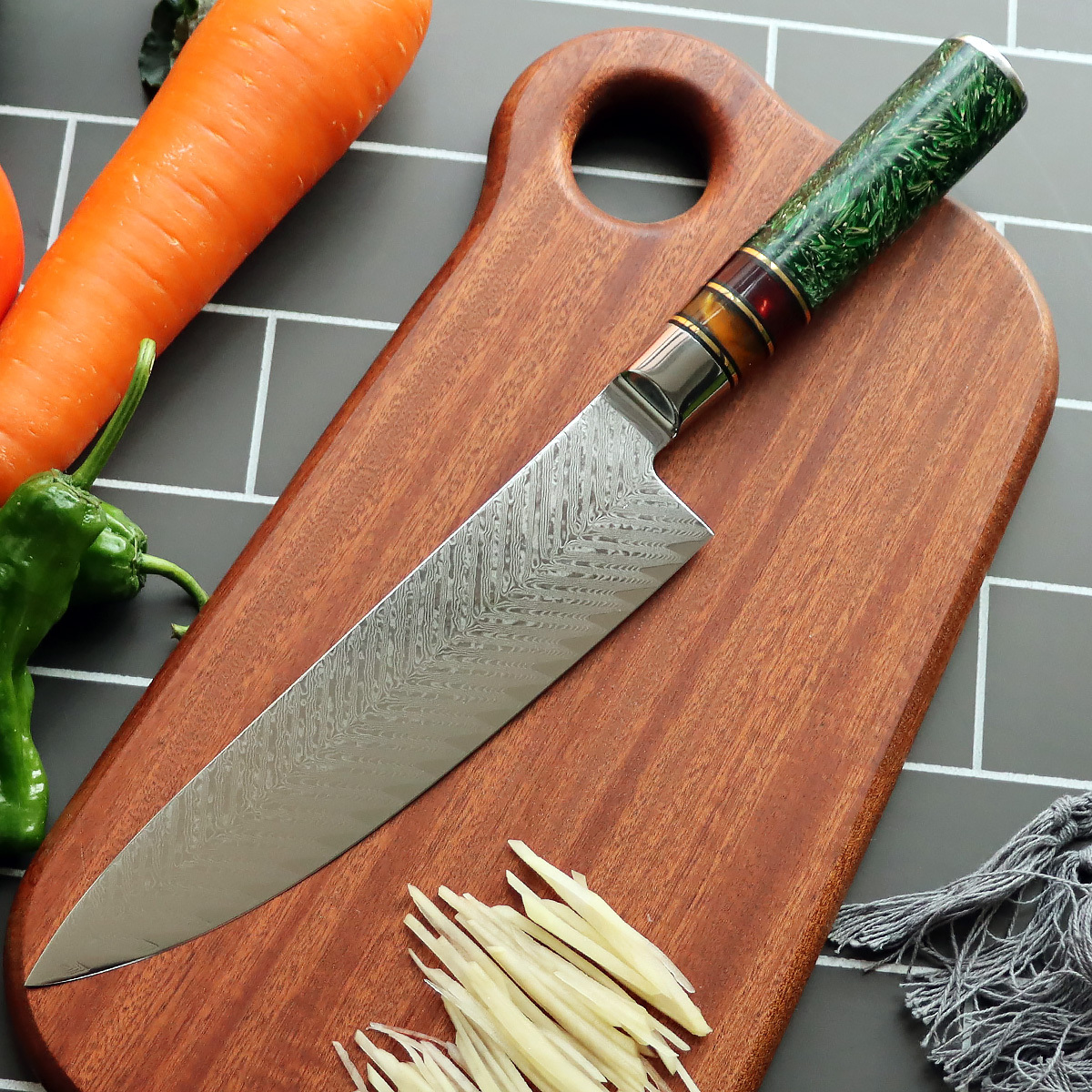
Originating in Germany and France, the classic chef knife is the all-purpose heavy lifter of Western kitchens.
Key Characteristics
-
Blade Length: Typically 8 to 10 inches, offering maximum coverage for large ingredients.
-
Curved Edge: The blade sweeps upward toward a sharp, center-aligned tip. This pronounced belly is built specifically for a rocking motion—where the tip stays on the cutting board while the back of the blade moves up and down.
-
Weight and Balance: Built with a full tang (metal extending through the length of the handle) and a heavy bolster (the thick transition between blade and handle). This gives it a sturdy, hefty feel that helps drive the knife through dense produce like squash or watermelon.
-
Sharp Tip: The narrow point makes it easy to pierce meat, score pork shoulder, or trim silverskin from beef tenderloin.
Best Used For
-
Breaking down chickens and trimming bone-in meats
-
Chopping dense root vegetables like sweet potatoes and carrots
-
Rapidly rocking through piles of herbs and leafy greens
What Is a Santoku Knife?
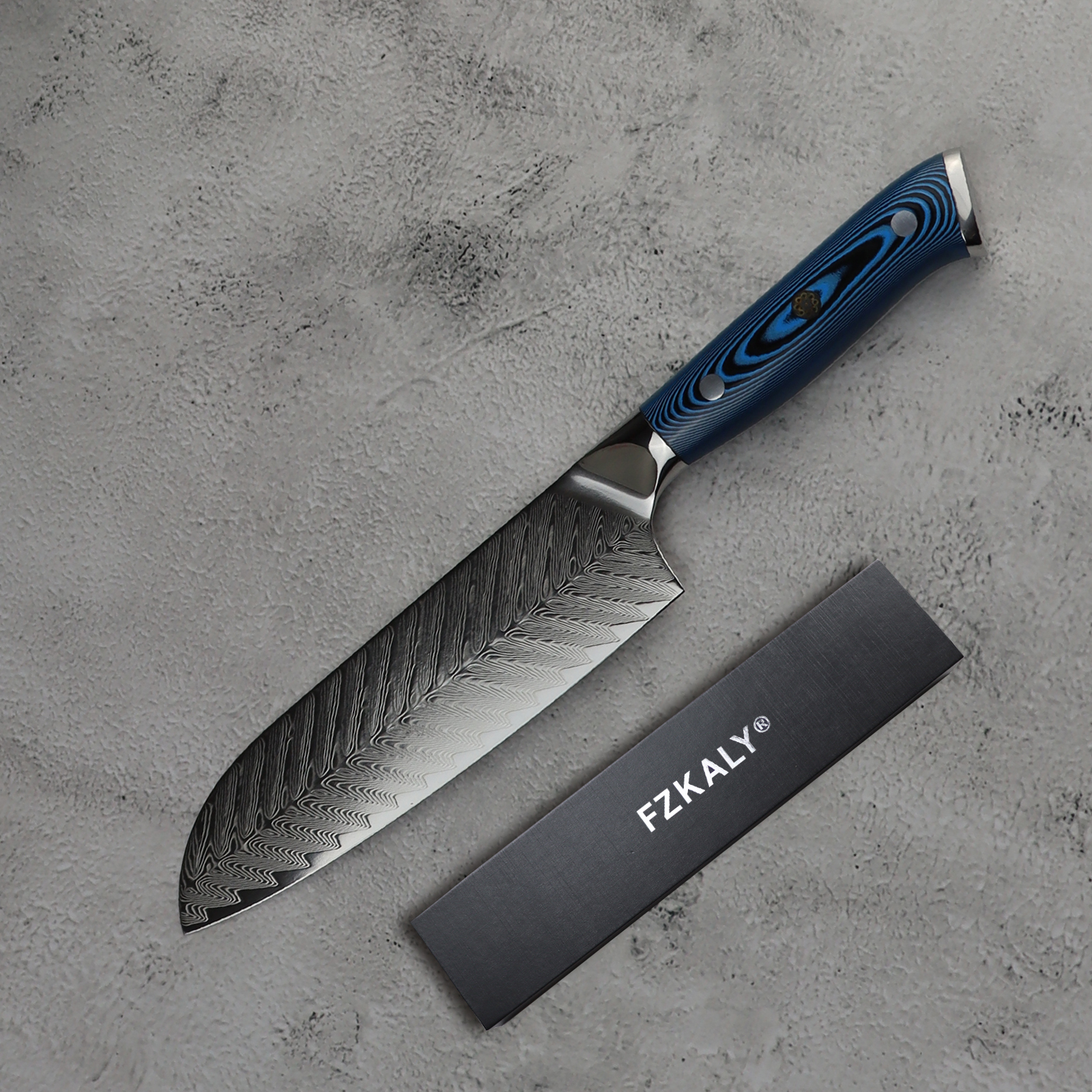
"Santoku" roughly translates from Japanese as "three virtues" or "three uses"—referring to its ability to handle meat, fish, and vegetables with equal skill. It represents Japan's adaptation of the Western chef knife, refined for precise, effortless slicing.
Key Characteristics
-
Blade Length: Usually 5.5 to 7 inches, making it noticeably shorter and more nimble than a standard chef knife.
-
Flatter Edge & Sheep’s Foot Tip: The edge stays straight until the end, where the spine curves down to meet the edge (a "sheep's foot" curve). Rather than rocking, the Santoku relies on a push-cut motion—moving slightly forward and straight down.
-
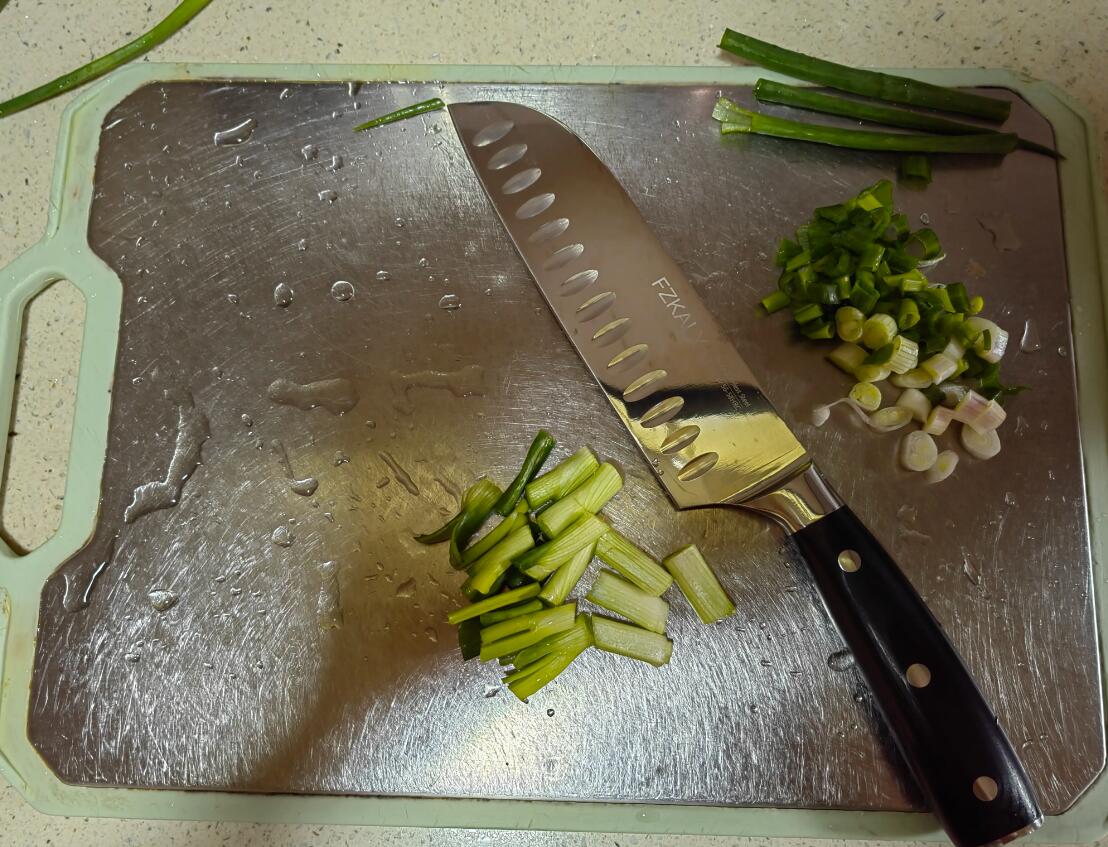
Granton Edge (Scalloped Depressions): Most modern Santokus feature small dimples ground along the side of the blade. These create air pockets between the steel and the food, preventing thin slices of potato, cucumber, or radish from sticking to the knife.
-
Lightweight Precision: With a thinner blade spine and a less bulky handle structure, the Santoku feels fast and lightweight in the hand.
Best Used For
-
Thin, uniform slices of onions, cucumbers, and tomatoes
-
Fine dicing, julienne cuts, and delicate vegetable prep
-
Precision slicing of boneless poultry and fresh fish fillets
Head-to-Head Comparison
Comment